
Track Car Reviews
The ND1 Miata on Track: Why a 155-HP Roadster Will Humble Your Buddy's Mustang
By Hot Lap Rentals · 7 min read

February 9, 2026By Hot Lap Rentals Staff Writer• 8 min readAnd also why it'll occasionally make you want to scream into your helmet.
So you want to take a car to the track but you don't want to remortgage your house. You've looked at the used Corvette market (sketchy), thought about a clapped-out E46 (sketchier), and briefly entertained the idea of a Civic with a fart can (no). Then someone at a Cars & Coffee says six words that change everything:
"Dude, just get an ND Miata."
They're right. They're also wrong. Let's talk about it.
What We're Working With
The ND1 refers to the 2016–2018 Mazda MX-5 Miata — the fourth generation, before it got the power bump in 2019. Under the hood sits Mazda's Skyactiv-G 2.0-liter four-cylinder making 155 horsepower and 148 lb-ft of torque. On paper, those numbers look like a typo from 1997.
On track? Those numbers stop mattering real fast.
The ND1 tips the scales at roughly 2,332 lbs in soft-top form. That's lighter than most crossovers' doors. Mazda engineers went absolutely feral with weight savings on this chassis — aluminum hood, thinner glass, even lighter cupholders (probably). The result is a car that has a power-to-weight ratio that actually competes, and a chassis that was clearly developed by people who understand what a late apex is.
The Strengths: Why Track Rats Love This Thing
It Teaches You to Drive
This is the big one, and it's not just motivational poster fluff. The ND1 is slow enough that you can explore the limits of grip without the limits of your health insurance. You'll learn trail braking, weight transfer, and throttle management because you have to. There's no turbo to bail you out of a lazy corner entry. There's no 400 horsepower to make up for a blown apex on the straight.
In an ND1, every tenth of a second comes from you. That's either terrifying or addicting. Usually both.
The Chassis Is Stupid Good
Mazda's "gram strategy" wasn't marketing speak — they genuinely obsessed over making this platform as balanced and responsive as possible. The 50/50 weight distribution isn't just a spec sheet flex. You feel it the first time you rotate the car mid-corner with a lift of the throttle. The steering is electrically assisted but somehow still communicates more than most hydraulic setups from ten years ago.
The car talks to you through the seat, through the wheel, through the pedals. It's basically a rolling Rosetta Stone for chassis dynamics.
Consumables Won't Bankrupt You
Brake pads? Cheap. Tires? You're running 205-width, so a set of RE-71Rs or RT660s won't cost you a kidney. Oil changes are straightforward. The engine is naturally aspirated and doesn't eat itself at 5,000 miles like certain turbo four-cylinders we won't name (we'll name them — it's the FA20, and you know it).
A season of track days in an ND1 costs roughly what two weekends in a Porsche costs. That's not an exaggeration.
It's Momentum Driving, and Momentum Driving Rules
The ND1 forces you to carry speed through corners because you can't just stomp the gas on exit and make up time. You learn to be smooth. You learn that the fastest line isn't always the widest line. You learn to keep the car loaded through transitions.
And when you nail a string of corners and carry three extra mph through each one? That feeling is better than any straight-line pull in a muscle car. Fight me.
It's Absurdly Reliable
The Skyactiv 2.0 is a proven, naturally aspirated engine with no forced induction components to grenade. The ND1 is the kind of car you can beat on all day Saturday and drive to work Monday without a single warning light. Aftermarket support is massive, parts are plentiful, and every independent shop in America knows their way around a Miata.
The Weaknesses: Let's Be Honest
155 Horsepower Is... 155 Horsepower
Look, we just spent 400 words telling you power doesn't matter. It does matter a little.
On tracks with long straights — think Road Atlanta's back straight or the front stretch at Daytona — you're going to feel it. Cars you outbrake and out-corner will just walk away from you under acceleration. It's demoralizing watching a stock Camaro SS reel you in like a fish on a straight you just committed a perfect corner to set up.
The ND2 fixed this with a bump to 181 hp and a higher redline. The ND1's 155 hp with a 6,800 RPM fuel cut feels breathless at the top end, like the engine wants to give more but Mazda said no.
Cooling Can Be an Issue
The ND1 wasn't designed for sustained high-RPM track use, and the cooling system shows it. Extended sessions in hot weather can push coolant temps into uncomfortable territory, especially on technical tracks where you're always in second and third gear. Oil temps climb too.
Budget for an oil cooler early — it's not optional, it's required if you plan to do more than a couple lapping days a year. A coolant reroute is also popular in the community, and for good reason. The factory cooling system prioritizes cabin heater performance over engine cooling, which is a weird flex for a track car.
The Interior Gets Hot
Soft top ND Miatas at the track in July are basically rolling convection ovens. The transmission tunnel radiates heat like a space heater, and the cockpit is tiny. You will sweat in places you forgot existed. The RF is marginally better at insulating you from the sun, but worse at ventilation. Pick your poison.
Stock Brakes Fade
The factory brakes are fine for street driving. Push them hard for 20 minutes and you'll discover what brake fade really means. The front calipers are small, the rotors are thin, and the stock pads turn to warm butter after a few hard sessions. Upgraded pads are the minimum ($200ish), a big brake kit is the proper fix if you're getting serious ($1,500+).
It's Small — Like, Really Small
If you're over 6'1" or north of 220 lbs, the ND cockpit is going to feel like a punishment. Adding a roll bar (which you should) makes it tighter. Fitting with a helmet means your head might graze the soft top. The footwell is narrow enough that heel-toe downshifts require either small feet or serious practice. Be honest with yourself about whether you fit before you commit.
The Mod Priority List (If You're Building One)
If you're taking an ND1 to the track, here's where your money should go, in order:
- Good tires and an alignment. This is the single biggest upgrade. Period.
- Brake pads. Track-compound pads transform the braking experience.
- Oil cooler. Protect your engine. This isn't glamorous but it matters.
- Coilovers. The stock suspension is good, but proper coilovers unlock another level of capability.
- Roll bar. Safety first, and it stiffens the chassis as a bonus.
- Seats and harness. Better support means less fatigue and faster, more consistent laps.
Notice what's not on this list? A turbo kit. Forced induction on an ND1 track car opens a Pandora's box of cooling, reliability, and tuning headaches. If you need more power, sell it and buy an ND2. Or a Corvette. Or just get faster with what you've got — you probably have more time to find in your driving than you think.
The Verdict
The ND1 Miata is one of the best track day cars you can buy for under $25K, and it's not particularly close. It won't set any speed records. It won't pin you back in the seat. It won't make your Instagram followers think you're rich.
What it will do is make you a better driver, put a permanent grin on your face, and let you run 20+ track days a year without draining your savings account. The weaknesses are real — the power deficit, the cooling, the brakes — but they're all manageable with modest investment.
The ND1 doesn't ask you to be fast. It asks you to be good. And honestly? That's a way better proposition.
Want to try an MX-5 on track before you buy? Check out available Miata rentals on HotLapRentals.com and find out if the hype is real — one session at a time.
Track Day Rental Reviews
In the directory
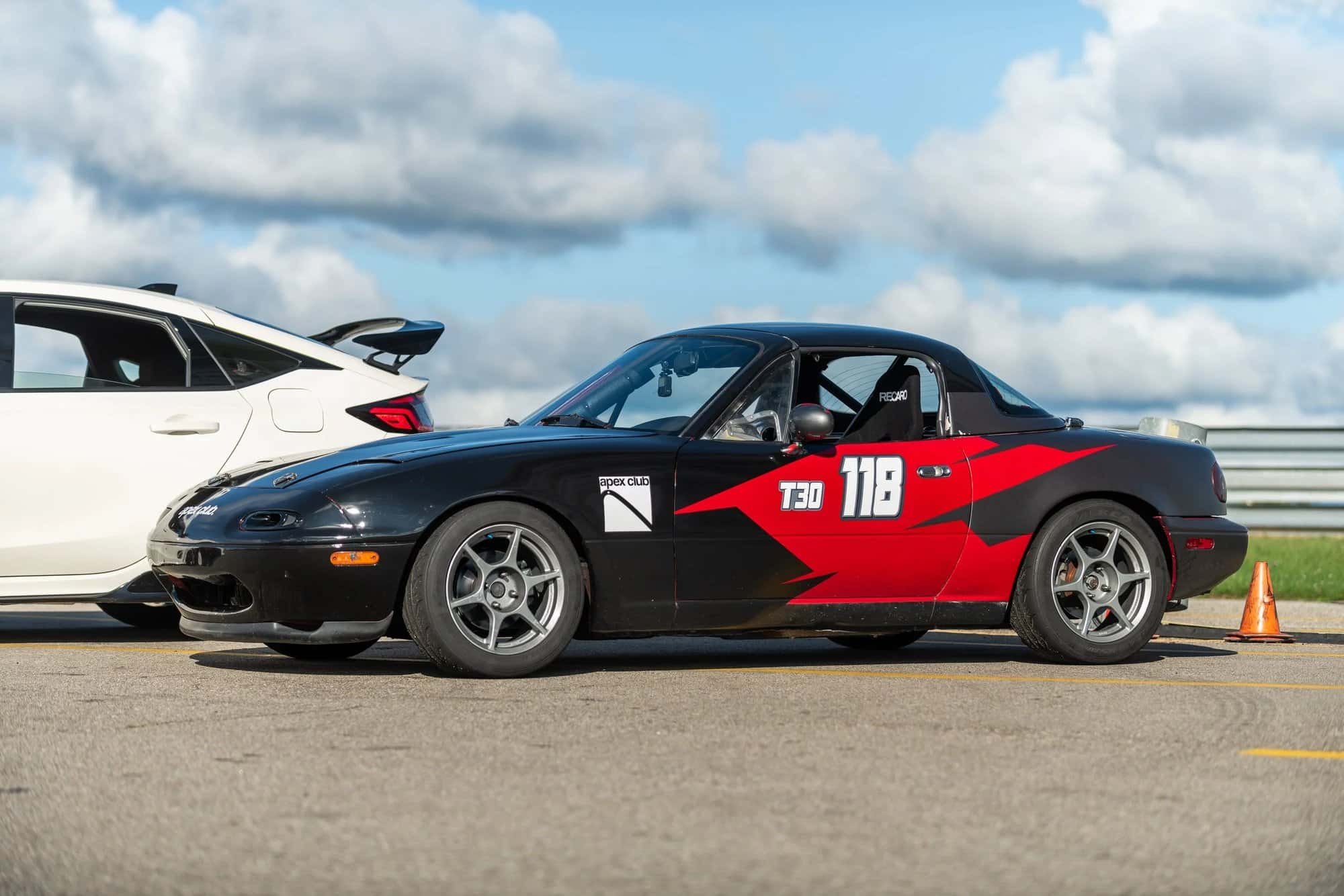
1994 Mazda Miata Track Car NA
Quote only /day
1997 BMW M3 Track Car E36
Quote only /day
2001 Mazda Miata Track Car NB2
Quote only /day
2012 BMW 128i Track Car E82
Quote only /day
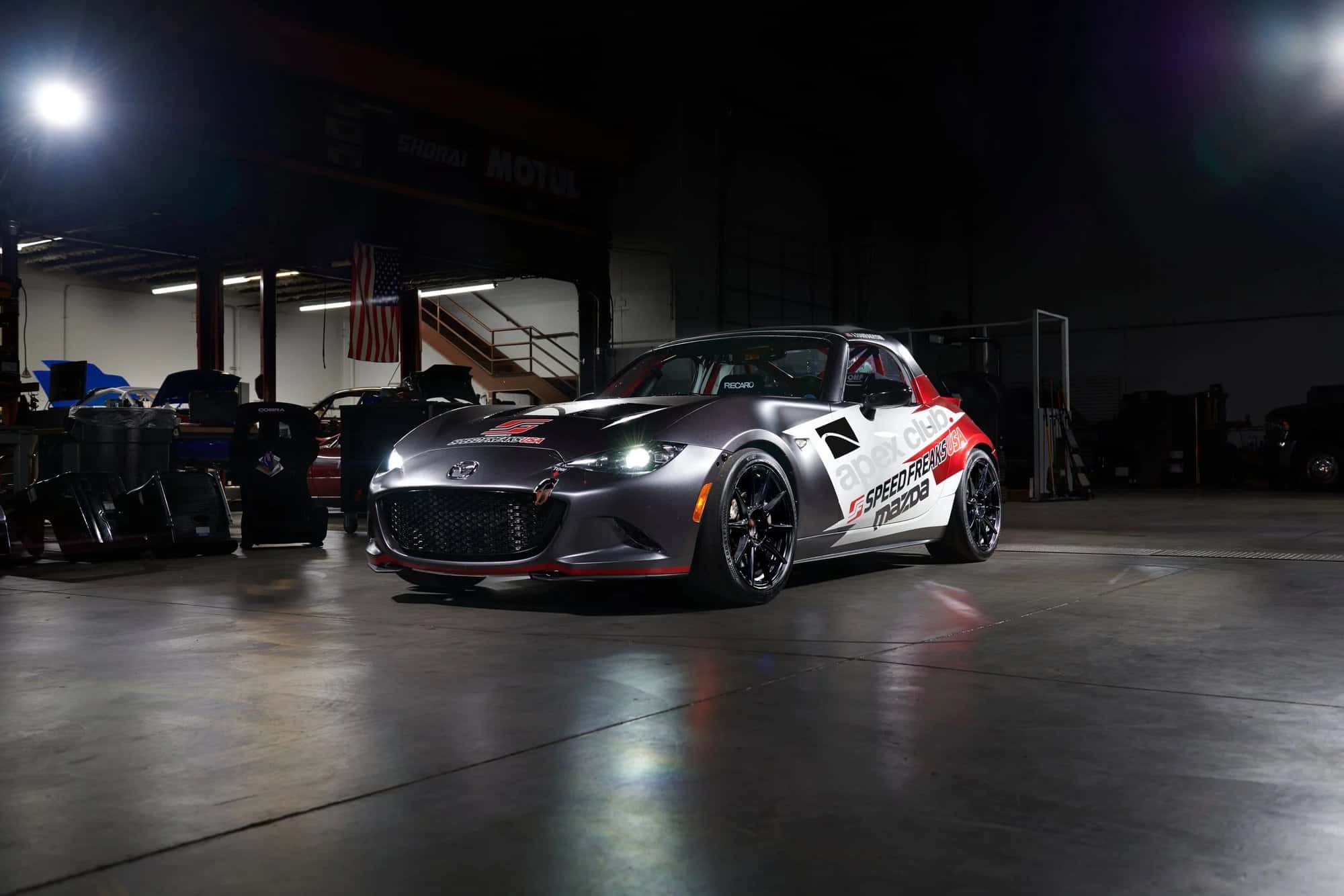
2016 Mazda MX-5 Miata Cup ND
Quote only /day

2019 Mazda MX-5 Miata Club
$750/day